
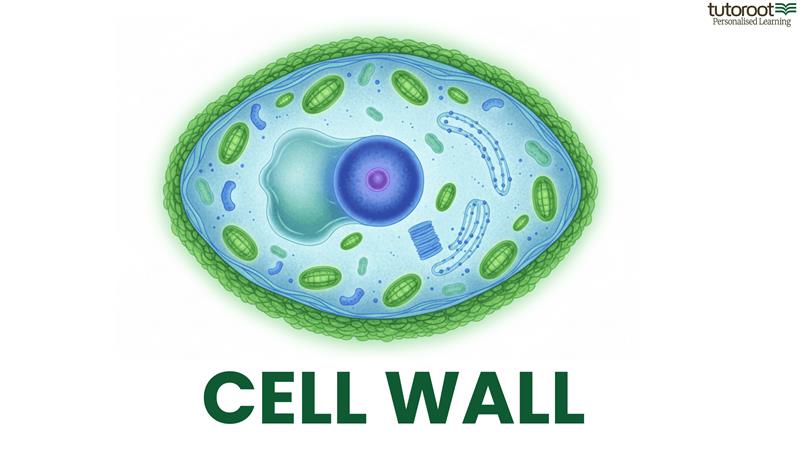
What is Cell Wall? – Definition, Structure, Function
Every living organism is composed of millions of cells that drive growth and evolution. In plants, fungi, and some bacteria, one of the most critical components is the Cell Wall. This rigid outer layer is the first line of defense and the primary source of structural integrity.
What is a Cell Wall?
A cell wall is a rigid, non-living layer that surrounds the plasma membrane of certain cells. Unlike the flexible cell membrane found in animals, lt provides a fixed shape and mechanical protection.
While almost all eukaryotic plants and fungi possess cell walls, they are absent in animal cells. In the world of prokaryotes, most bacteria have cell walls, though their chemical composition differs from that of plants.
The Structure of a Cell Wall
This plant is not just a single slab of material; it is a complex, multi-layered structure. It is primarily composed of carbohydrates like cellulose, hemicellulose, and pectin.
The Three Structural Layers:
-
Middle Lamella: This is the outermost “glue” layer. It acts as an interface between adjacent cells, cementing them together using pectic compounds.
-
Primary Cell Wall: Formed while the cell is still growing, this layer is thin and flexible. It consists mainly of cellulose microfibrils and structural proteins, allowing the cell to stretch as it matures.
-
Secondary Cell Wall: Once the cell has stopped growing, a thick secondary wall may form inside the primary wall. It contains lignin, which provides waterproofing and extreme rigidity—this is what gives wood its strength.
Key Functions of the Cell Wall
It is indispensable for a plant’s survival. Its roles include:
-
Mechanical Strength: It provides the “skeleton” for the plant, allowing it to grow tall without a bony skeleton.
-
Turgor Pressure Management: It prevents the cell from bursting when water enters via osmosis. This internal pressure (turgor) keeps the plant upright and prevents wilting.
-
Selective Permeability: It regulates the movement of nutrients, water, and waste through specialized channels called plasmodesmata.
-
Defense Barrier: It serves as a physical barricade against viruses, bacteria, and fungal pathogens.
Frequently Asked Questions (FAQ)
Who discovered the cell wall?
Robert Hooke first discovered and named the cell wall in 1665 while observing thin slices of cork under a primitive microscope.
What is the difference between a cell wall and a cell membrane?
It is rigid, non-living, and found only in plants, fungi, and bacteria. The cell membrane is flexible, living, and found in all living cells, including animals.
What is the nature of the cell wall in diatoms?
In diatoms, the cell wall is unique because it is made of silica (glass-like material), forming beautiful, intricate shells known as frustules.
Why don’t animal cells have cell walls?
Animals need to move, catch food, and adapt to their environment quickly.It would prevent the flexibility and mobility required for animal life.

Master Biology with Tutoroot
Understanding the microscopic world of cells is the first step toward a career in medicine or biotechnology. If you find cell biology or the structure of plant cells complex, our experts are here to help.
Tutoroot offers premium Online Home Tuition programs designed to fit your budget and schedule. Our interactive classes ensure you don’t just memorize facts, but truly understand the science behind them.