
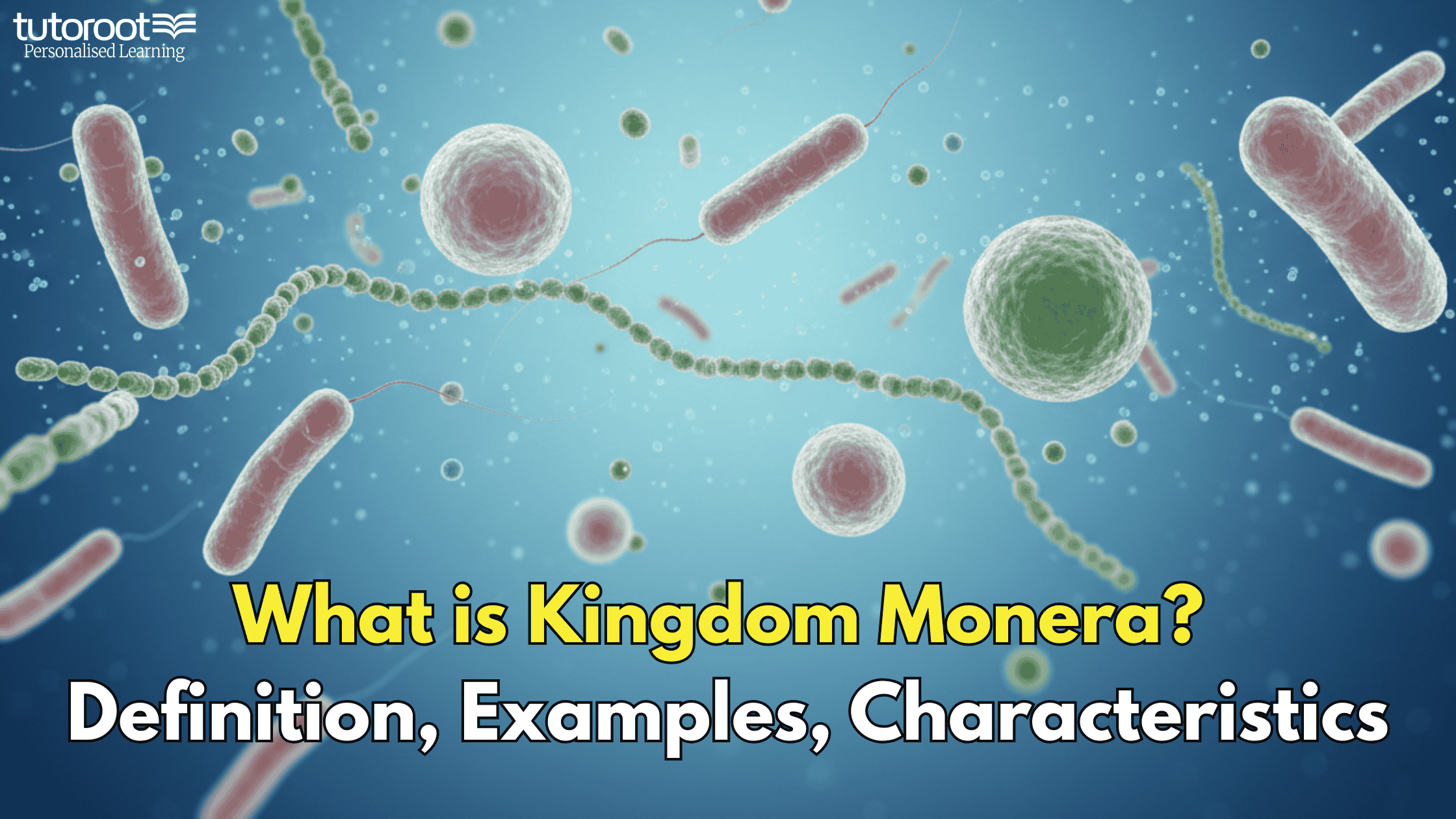
What is Kingdom Monera? Definition, Examples, Characteristics
Before delving into the specifics of Kingdom Monera, it’s essential to understand the concept of biological classification. In biology, living organisms are classified into various groups based on their shared characteristics. One such classification system is the five-kingdom classification, which categorizes organisms into Kingdoms: Animalia, Plantae, Fungi, Protista, and Monera.
What is Kingdom Monera?
Kingdom Monera comprises unicellular organisms, primarily bacteria and archaea. Unlike organisms in other kingdoms, Monera lack membrane-bound organelles and a true nucleus, hence they are often referred to as prokaryotes. This kingdom encompasses some of the earliest forms of life on Earth, exhibiting remarkable adaptability and diversity.
Kingdom Monera Diagram
The Kingdom Monera diagram represents a diverse group of unicellular organisms. These organisms lack a nucleus and membrane-bound organelles, making them prokaryotes. They play a crucial role in various ecological processes, showcasing the importance of studying them. The structure of Kingdom Monera is relatively simple yet intriguing. Most monerans possess a cell wall made of peptidoglycan, providing structural support and protection. Additionally, they have a plasma membrane, cytoplasm, and genetic material in the form of DNA. These organisms exhibit high adaptability to diverse environments due to their unique structure.
Looks complex? Let’s understand the structure.
In other words, Unlike more complex organisms, Monera lacks a distinct nucleus. Instead, it features a simple structure, with a cell wall and a cell membrane. The cell wall provides strength and protection, while the membrane regulates what goes in and out.
Within Kingdom Monera, organisms come in various shapes, such as cocci (spherical), bacilli (rod-shaped), and spirilla (spiral). The simplicity of their structure allows them to adapt and thrive in diverse environments, from the depths of the ocean to the highest mountain peaks.
Monera Kingdom Classification
Within the Kingdom Monera, there are various types classified based on distinctive characteristics. These include:
- Bacteria: These are the most common and well-known monerans. They can be found in various habitats, showcasing a wide range of metabolic capabilities.
- Archaea: Archaea are ancient prokaryotic organisms that thrive in extreme environments such as hot springs and deep-sea vents. They exhibit unique genetic makeup and metabolic pathways.
- Cyanobacteria: Also known as blue-green algae, cyanobacteria are photosynthetic bacteria capable of producing oxygen through photosynthesis. They play a crucial role in the Earth’s ecosystem.
Monera Kingdom Characteristics
The Kingdom Monera is characterized by several key features:
- Unicellular structure
- Prokaryotic cell organization
- Diverse metabolic capabilities
- Presence of cell wall
- Rapid reproduction rates
- Ubiquitous distribution in various environments
Examples of Kingdom Monera
Now, let’s meet some of the notable inhabitants. These examples demonstrate the diversity within this kingdom:
- Escherichia coli (E. coli): Found in the human gut, E. coli serves various metabolic functions and is commonly used in biological research.
- Mycobacterium tuberculosis: The causative agent of tuberculosis, this bacterium showcases the pathogenic nature of certain monerans.
- Synechocystis: A type of cyanobacteria, Synechocystis contributes to oxygen production through photosynthesis.
- Streptococcus pyogenes: Known for causing strep throat and other infections, this bacterium is a significant human pathogen.
- Methanogens: A type of archaea that produces methane as a byproduct of metabolism, playing a crucial role in the carbon cycle.
Final Verdict
In conclusion, Kingdom Monera represents a fascinating and diverse group of organisms essential for understanding the intricacies of the biological world. From their structure and classification to their unique characteristics and examples. Remember to explore further and discover the wonders of Kingdom Monera, unlocking a world of knowledge waiting to be explored.
This blog post delves, the shedding light on its definition, examples, structure, classification, and characteristics. Dive into the realm of Monera and uncover the mysteries of these unicellular organisms.
Eager to easily grasp concepts, as illustrated above? Delve into our Tutoroot Blog section for simplified learning. Deepen your understanding of subjects and get your questions answered through Tutoroot’s online tuition. Immerse yourself in Tutoroot’s online home tuitions today by scheduling a FREE DEMO session.

Frequently Asked Questions (FAQs)
1. Why is Kingdom Monera classified as prokaryotic? Monerans are prokaryotes because they lack a membrane-bound nucleus and organelles like mitochondria. Their genetic material floats freely in the cytoplasm in a region called the nucleoid.
2. What is the main difference between Bacteria and Archaea? While both are monerans, Bacteria have cell walls made of peptidoglycan, whereas Archaea have unique membrane lipids. This chemical difference allows Archaea to survive in extreme environments like boiling vents or salt lakes.
3. How do organisms in Kingdom Monera reproduce? They primarily reproduce asexually through a rapid process called binary fission, where one cell splits into two. This simple division allows bacterial populations to double in size in as little as 20 minutes.
4. Are all Monerans harmful to human health? No, most are beneficial, such as Lactobacillus used in food production or the helpful bacteria in our gut. Only a small percentage, known as pathogens, cause diseases like tuberculosis or strep throat.
5. How does Kingdom Monera contribute to the environment? Monerans act as primary decomposers that recycle nutrients and as nitrogen-fixers that help plants grow. Cyanobacteria specifically contribute to the planet by performing photosynthesis and releasing oxygen.