
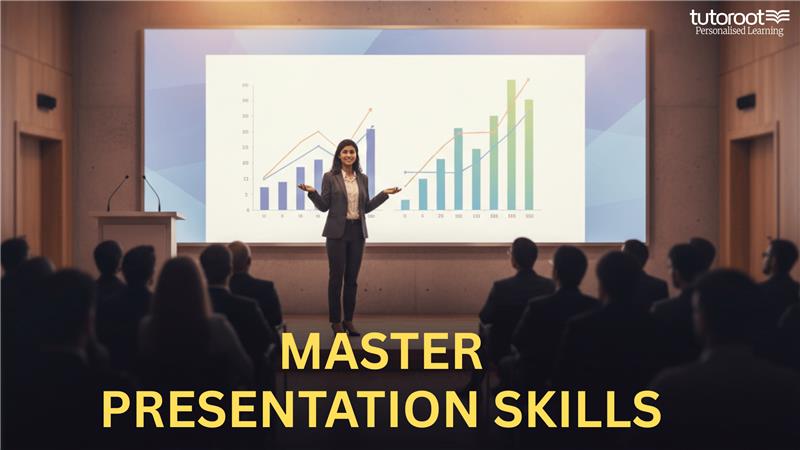
What are Presentation Skills? Importance, Benefits
Introduction
In today’s fast-paced world, communication is your most valuable currency. Presentation skills are no longer just for keynote speakers—they are essential for students, corporate professionals, and even parents. Whether you are pitching a project, tackling a viva, or leading a meeting, the ability to present yourself effectively is a game-changer.
In this guide, we break down what presentation skills are, the different types you need to master, and how they can unlock your true potential.
What are Presentation Skills?
Presentation skills refer to the ability to effectively convey information, ideas, or opinions to an audience using oral, visual, or written means. It’s more than just talking; it’s about using a combination of techniques to ensure your message is understood, remembered, and acted upon.
The 4 Essential Types of Presentation Skills
To be an impactful communicator, you must balance these four core areas:
-
1. Verbal Skills: This involves articulating thoughts clearly and concisely. It’s not just what you say, but how you say it—focusing on storytelling, tone, and pacing to keep the audience engaged.
-
2. Visual Skills: Modern presentations rely on visual impact. This includes designing professional slide decks, using props, or incorporating multimedia to simplify complex data.
-
3. Nonverbal Skills: Your body language speaks louder than words. Eye contact, gestures, facial expressions, and a confident posture build instant credibility and rapport with your listeners.
-
4. Technological Skills: In 2026, tech is vital. Mastering presentation software, virtual meeting platforms, and AI-driven design tools ensures your delivery is seamless and modern.
Why are Presentation Skills Important?
These skills are essential across every sphere of life:
-
Effective Communication: They ensure your ideas are not just heard, but understood and persuasive.
-
Career Advancement: In a competitive job market, the ability to present convincingly sets you apart for promotions and leadership roles.
-
Leadership Development: Great leaders inspire action through compelling speeches and clear vision casting.
-
Academic Performance: For students, strong presentation skills lead to better participation, higher project grades, and success in college interviews.
The Top Benefits of Sharpening Your Skills
-
Increased Confidence: Practice turns intimidation into empowerment. The more you present, the better you handle unexpected questions and high-pressure situations.
-
Improved Influence: Persuasion is a skill. By mastering delivery, you can sway opinions and create a lasting impact on your audience.
-
Knowledge Transfer: Great presenters take complex concepts and make them easy to digest, which is crucial for teachers, trainers, and students alike.
-
Professional Reputation: Delivering a polished presentation reflects your competence and builds a “brand” of reliability and expertise.

Final Thoughts
Presentation skills are not innate talents—they are muscles you can build through practice and guidance. Whether you’re preparing for a classroom viva or a high-stakes business pitch, investing in these skills is an investment in your future.
Ready to transform your communication? Explore the Tutoroot Blog for more simplified learning. Deepen your understanding of any subject through Tutoroot’s personalized online tutoring.
Frequently Asked Questions (FAQs)
Q: Why are presentation skills important for students?
A: They help students participate in discussions, excel in group projects, and prepare for the communication demands of higher education and future careers.
Q: What are the 4 main types of presentation skills?
A: The four types are Verbal, Visual, Nonverbal, and Technological skills. Combining these creates a powerful and engaging presentation.